Hidden fasteners versus traditional deck screws
Clips give a clean face; screws give a repairable one. Stainless, coated, movement and coastal air decide which fastening is craft and which is a future squeak.

The cleanest photograph of a designer deck is a field of boards with no visible screws. The most useful deck, six summers later, is the one you can repair. Those two sentences are not always at war, but they are not the same brief. Hidden fasteners and traditional deck screws are different philosophies of how timber is allowed to move, how a plank is replaced, and what you are willing to see when you look down with a coffee.
This is a fastening essay, not a brand parade. Stainless versus coated. Clip systems versus a face-screwed hardwood. Squeak, movement, coastal corrosion, and the look that made you care in the first place. If you are still choosing the board itself, start with profile, span and thickness; the fastener cannot redeem a board that was already too thin for the joist.
A hidden clip is not a disappearing act. It is a piece of metal or polymer in a groove, doing structural work you cannot inspect from the sofa. If you would not trust that piece in a salt wind, do not hide it.
What a screw is actually doing
A traditional deck screw clamps a board to a joist. It is a visible, replaceable, understandable object. Two screws per joist in a hardwood board is still a common, honourable pattern. The screws take the board’s movement as a set of small arguments: a slightly enlarged hole, a tiny proud head after a dry spell, a stain halo if the metal is wrong.
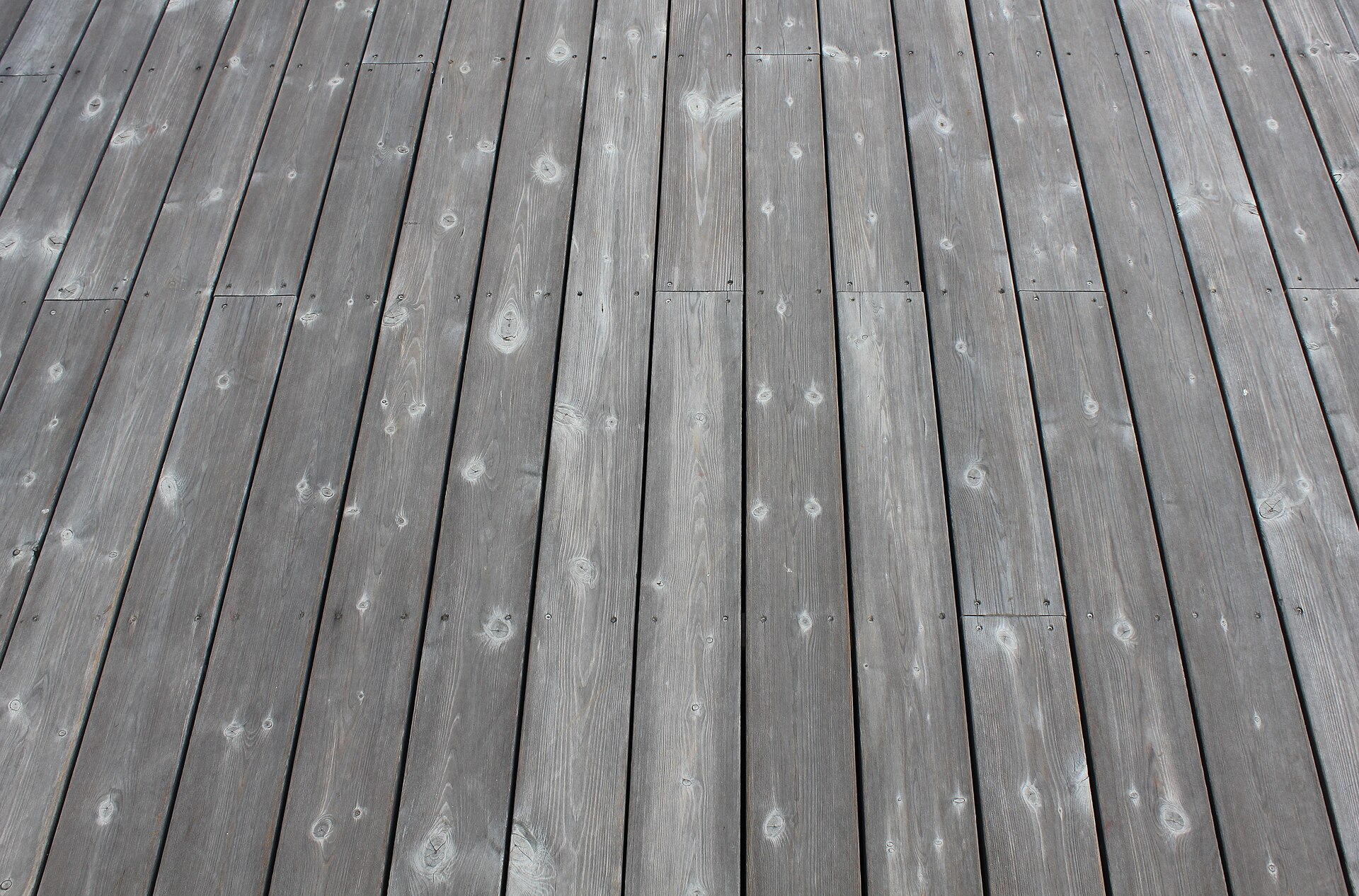
Done well, face-screwing is a craft. Lines are snapped. Pilots are drilled, especially in dense eucalypts. Heads sit flush, not cratered. The pattern is a rhythm, not a scatter. Stainless in any coastal or treated-pine situation that will punish a coating. The look is honest: this is a timber floor in the weather, held by metal you can see.
Done badly, face-screwing is a weekend of split ends and rust blooms. A coarse bugle in ironbark without a pilot is a wedge. A cheap coated screw in H3 pine near a headland is a rust stitch. Overdriven heads hold water. Underdriven heads catch a mop and a child’s foot.
There is a third state, which is the one I prefer on many designer jobs: screws placed with enough care that they become part of the architecture — a double line, consistent set-out, a metal that matches the house’s other hardware. Not hidden. Composed.
What a hidden system is actually doing
A hidden fastener holds the board from the edge or the underside: a clip in a side groove, a biscuit in a slot, a proprietary tab that the next board locks over. The face stays clean. The photograph looks like a European terrace. For clients who have pointed at a Kebony-like evenness or a composite showroom, this is often the non-negotiable.
The clip has to do several jobs at once. It must hold the board down against a chair leg. It must let the board move enough that a hot January does not ridge the field. It must not chew the groove until the board is loose. It must survive the same weather as the screw you chose not to see.
Some systems are excellent in the board they were designed for — particularly composite profiles whose groove is part of the extrusion. Some systems are optimistic when asked to hold a dense, moving Australian hardwood that was grooved on site by a carpenter who learned the method on YouTube. The failure is rarely dramatic. It is a board that walks, a clip that ticks, a run that loosens from the end like a bad zipper.
Stainless versus coated
Metal is the part of a deck most likely to fail while the timber is still deciding how to silver.
Stainless is the default I want near salt, near a pool’s chemical air, and in any assembly with copper-rich treated pine. Use a grade the fastener supplier will stand behind in that exposure. Do not assume every silver screw is stainless. Do not assume every stainless screw is the right stainless for a chloride environment. Coastal detailing is a specification, not a colour.
Coated screws — ceramic coatings, proprietary films, the ones sold as “decking screws” in a plastic tub — can be perfectly adequate inland, in a kind atmosphere, in timber that does not eat them. The coating is only as good as the day you drive it. A cam-out, a scratched shank, a head that was abused by the wrong bit, and you have ordinary steel with a view of the weather.
Mixing metals is how you get galvanic surprises. A stainless screw into a galvanised hanger through a damp treated joist is a little electrochemical story. Keep the connector system coherent. If the hanger is stainless, the screw that holds it should not be a mystery coating from a job lot.
Clips have the same problem in miniature. A polymer clip with a stainless pin is a different object from a thin coated steel tab. Ask what the clip is made of. Ask whether the manufacturer has a coastal note. If they do not, you have your answer.
Board replacement: the test nobody applies in the showroom
Boards fail locally. A barbecue scar. A split from a pot that was always too heavy. A stain that will not lift. A dog that chose one plank as a project. The fastening decides whether that is a morning’s work or a negotiation with three metres of neighbours.
Face-screwed boards come out. You back the screws, you lift the plank, you put a new one down, you live with a slightly fresher colour until the sun evens the story. It is not glamorous. It is how timber buildings have always been kept.
Hidden systems vary. The good ones publish a removal method: a starting board at the edge, a clip that releases, a sacrificial first plank. The bad ones are a locked field. To replace the third board in you must unpick the run, and nobody will, so the damaged board stays, or the whole bay is replaced in a sulk. If you are the kind of owner who repairs rather than replaces a whole deck, this is not a small preference. It is the difference between a maintainable asset and a sealed gadget.
Write the replacement method into the specification. Ask the installer to show you, on a leftover board, how it comes out. If they cannot, you are buying a look.
Squeak and movement
Timber moves. Composite moves differently, but it moves. A fastener that pretends otherwise will talk.
Squeaks come from a board rubbing on a joist, a clip flexing in a dusty groove, a screw working in an oval hole, two boards touching along an edge that was set too tight. Hidden systems squeak in a more mysterious register because you cannot see which clip is the musician. Screws squeak too, especially when they have loosened and the board is teetering on a proud joist.
Prevention is boring and effective:
- Flat, dry joists. A hump is a squeak factory.
- The correct gap for the board, including ends.
- Clips that are rated for the species and not over-tightened into a rigid grid.
- Pilot holes in hardwood so the screw is a clamp, not a wedge.
- A break in long runs so movement has somewhere to go.
Cure is easier with screws: you can add one, replace one, or drive a slightly larger one into a sound piece of joist. Cure with clips often means lifting a field to find a crushed tab. That is not an argument against clips. It is an argument for a system you can enter.
Coastal air, and the fastener you cannot wash
Salt does not need a dramatic headland. A bay suburb with a nor’-easter is enough. Connectors under a deck are rarely washed. They sit in a damp, salty shade and work on the metal every night. This is why a beautiful face-screwed stainless job can still fail at the hanger, and why a hidden clip of indifferent steel can rust in a groove you will not see until a board lifts.
Specify the whole fastening ecology: screw or clip, hanger, stringer bolt, post stirrup. Wash what you can reach. Design the undercroft so a hose and an inspection torch are not fantasies. A designer deck that cannot be inspected is a deck that will surprise you.
Appearance, which is allowed to matter
You are allowed to want a clean face. Architecture is allowed to want a clean face. A fine contemporary house with a pale interior running out onto a field of screw heads can look like a job that stopped one decision short. Hidden fastening earns its keep there, in the right board, with the right clip, and with a replacement story.
You are also allowed to like screws. On a hardwood with a strong grain, a regular stainless pattern can look like boatbuilding rather than a compromise. On a rustic red-gum terrace it can look like the only sane option. Taste is not a structural defect.
What I resist is the hidden fastener as a default for every quote, including the ones where the board is wrong, the clip is unrated, and the only reason for hiding the metal is that a photograph had no metal. That is not design. That is embarrassment about carpentry.
A practical way to decide
- Choose screws when the species is dense and lively, when replacement matters, when the installer is better with a drill than with a proprietary system, when the house can wear a composed pattern.
- Choose hidden clips when the board was milled for them, when the look is a genuine part of the architecture, when the manufacturer’s coastal and movement notes exist, when you have watched a board come out.
- Choose a hybrid more often than the arguments admit: clips in the main field, screws at the margins, the starter, the breaker and the stair — the places that take the abuse and need to come apart.
Then spend the money you saved on not arguing about philosophy on the metal itself. Stainless where the air says so. A clip that is a designed object. A screw pattern you could photograph without shame. The fastener is the smallest thing on the invoice and the first thing that tells you whether the deck was built by someone who has to come back.
Questions readers send
- Are hidden clips strong enough for a hardwood deck?
- They can be, if the clip, the groove and the species were designed together and the joist spacing is sensible. They are not strong enough if you site-cut a groove into ironbark and use a clip meant for a lighter imported board. Strength is a system. Ask how a point load over a single clip travels to the joist.
- Stainless or coated screws — what should I buy?
- Coastal and any salt-influenced site want stainless. Inland, a good coated exterior screw can be adequate in the right timber, but coating quality varies and a scratched coating rusts. Do not mix metals in a way that sets up a couple. Cheap coated screws in treated pine near the sea are a maintenance plan, not a saving.
- Can I replace one board in a hidden-clip deck?
- Only if the system was designed for it. Some clips let a board slide or lift with a published method. Some installations are effectively permanent until you destroy a run. If replacement matters — and it should — make the method part of the specification, not a surprise in year six.
- Why does a new deck squeak?
- Movement. Boards shrink, swell and rub on clips, on joists, or on a screw that has loosened in a hole that has gone oval. Dust in a groove, a clip that is too tight, or a joist that was never quite flat will add a voice. Fixing it is easier if you can get at the fastener.